

If you’ve been dealing with back pain, you’ve probably heard terms like spinal decompression, traction, or even seen inversion tables at a chiropractor’s office.
If you’ve been dealing with back pain, you’ve probably heard terms like spinal decompression, traction, or even seen inversion tables at a chiropractor’s office.
But what if there was a way to get similar benefits… in a way that actually feels good, is accessible, and something you’ll want to do consistently?
That’s where aerial yoga comes in.
At Open Aerial Yoga, we see people come in every day looking for relief from back pain. Here’s what you need to know before you try it.
Why Your Back Hurts in the First Place
For most people, back pain isn’t coming from a major injury.
It’s coming from:
Sitting at a desk all day
Poor posture over time
Weak core muscles
Lack of movement
And here’s the key:
All day long, gravity is compressing your spine.
Every step you take, every hour you sit, your vertebrae are getting slightly squished together.
Over time, that adds up.
How Aerial Yoga Helps Back Pain
Aerial yoga works because it does the opposite of what your body experiences all day.
Instead of compression, it creates decompression.
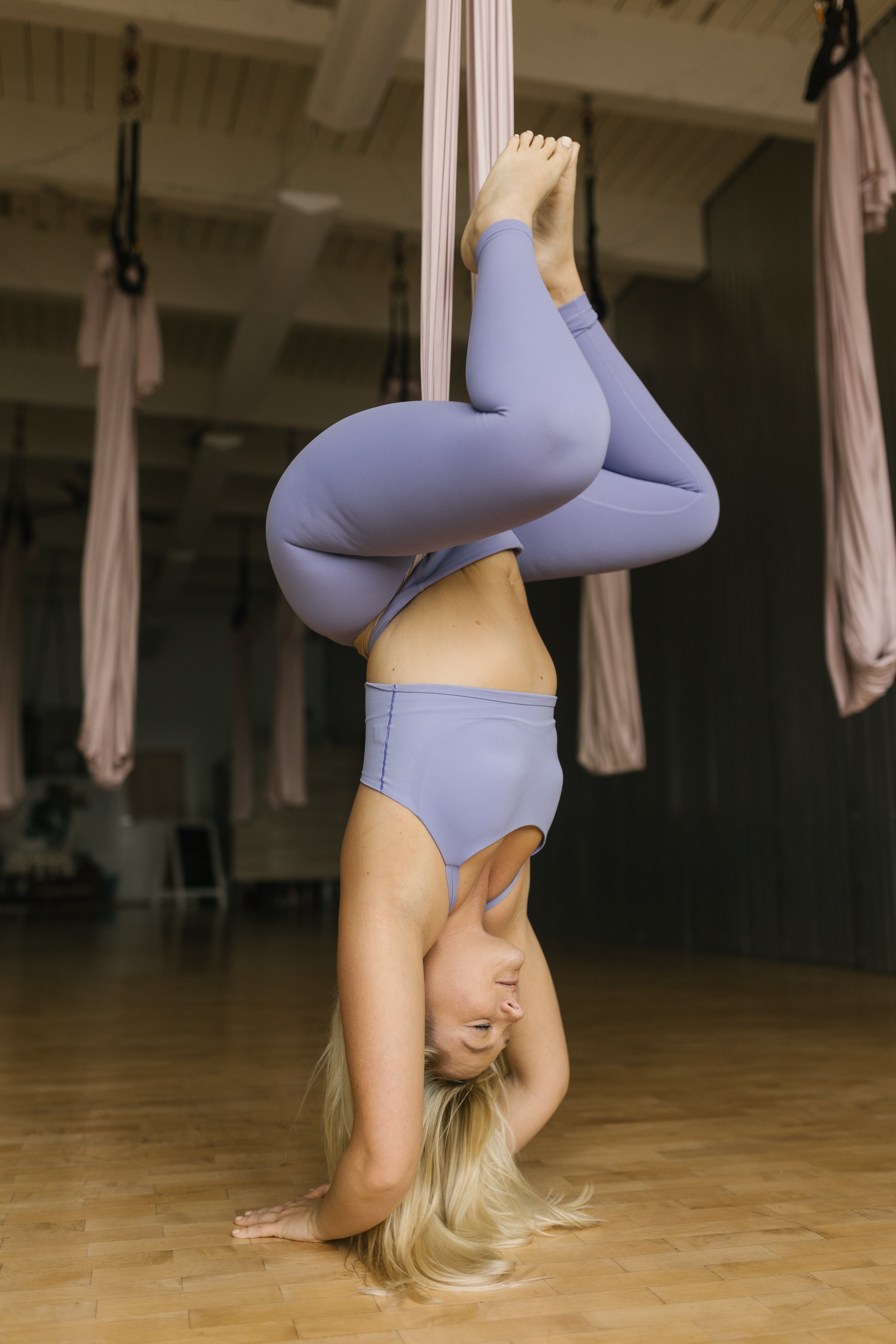
When you hang upside down in the aerial yoga hammock:
Your spine lengthens
Pressure between your vertebrae decreases
Your body gets a break from gravity
You’re essentially giving your spine space again.
And the best part?
You’re not forcing it. The hammock supports your body, so the stretch feels natural and controlled.
What Is Spinal Decompression (and Why It Matters)
Spinal decompression is exactly what it sounds like.
It’s taking pressure off your spine.
This can:
Reduce tension in your back
Improve mobility
Relieve tightness caused by sitting and posture
In our classes, this happens primarily during inversions, where your head is below your heart and your spine is aligned and gently stretched.
Aerial Yoga vs. Inversion Tables
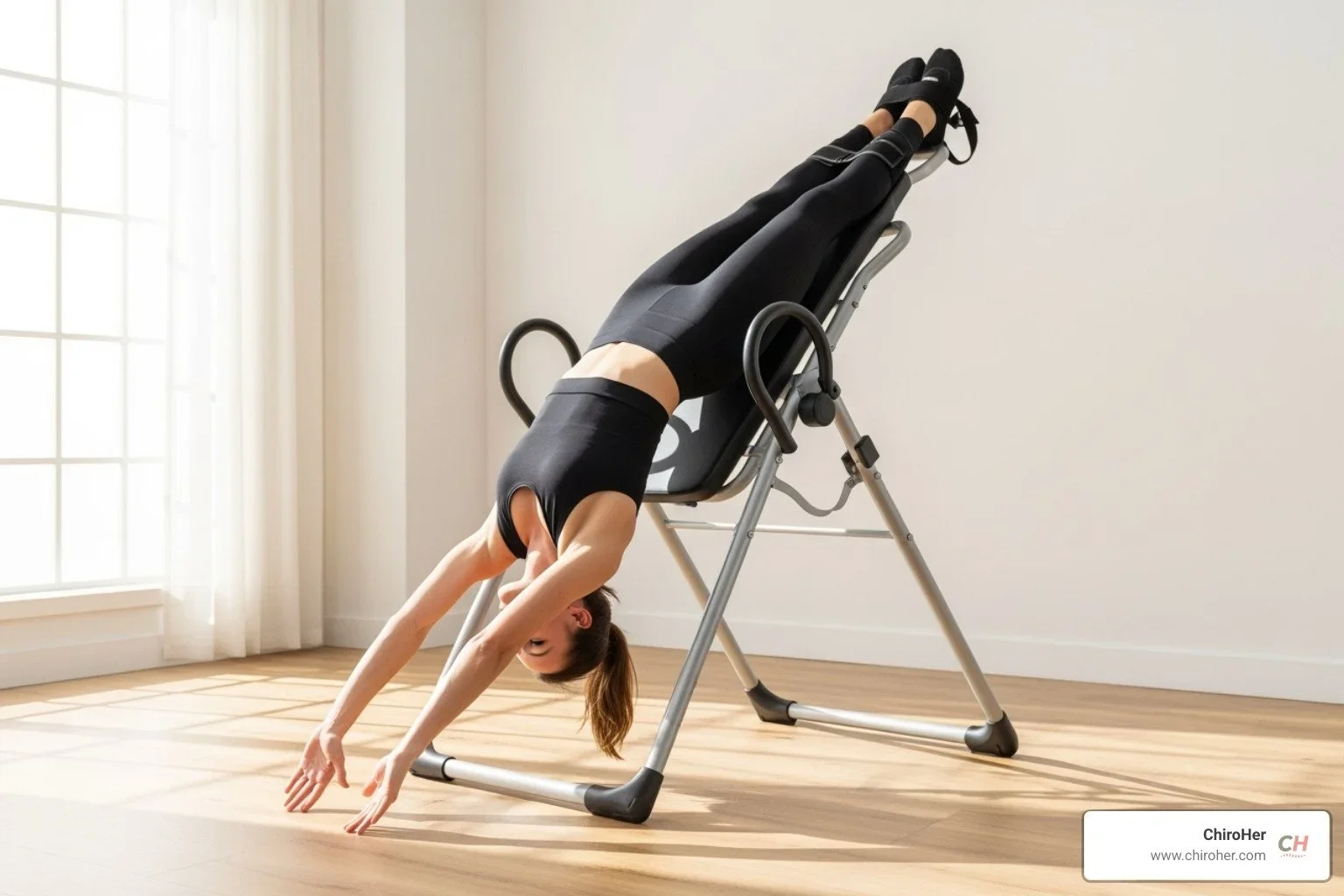
A lot of people ask how this compares to an inversion table.
Here’s the honest breakdown:
Inversion tables:
Static position
Can feel intense or uncomfortable
Expensive and bulky
Not something most people use consistently
Aerial yoga:
Supported, comfortable inversions
Guided by an instructor
Combined with movement, strengthening, and stretching
Something people actually enjoy and stick with
Both create decompression.
But aerial yoga adds something critical: consistency.
And consistency is what actually changes your body.
It’s Not Just Hanging Upside Down
If aerial yoga was only about flipping upside down, it wouldn’t work as well as it does.
What really makes the difference is everything else in the class:
Core engagement → supports your spine
Posture awareness → fixes the root cause of pain
Strength training → builds stability
Stretching → reduces tightness
Breathing → relaxes the nervous system
Your spine doesn’t exist in isolation.
Your entire body supports it.
That’s why people who think their pain is from “injury” often realize it’s actually from weakness and lack of use.
What Results Can You Expect?
After your first class:
You’ll feel relief during and right after inversion
Your back will feel looser and lighter
After consistent classes:
Less frequent back pain
Better posture
Improved mobility
Stronger core support
But here’s the honest truth:
One class won’t “fix” your back.
A lot of people feel amazing after one class, stop coming, and then their pain returns.
This works when you do it consistently.
Real Results We’ve Seen
At our studio, we’ve seen:
Students reduce sciatica symptoms
Older adults feel less stiffness and pain
People who sit all day finally get relief
We guide students through two inversions per class, giving them repeated opportunities to decompress their spine safely.
What a Typical Class Looks Like
A class is structured intentionally to support your body.
Start with a safety briefing
Move through a mindful warm-up
Flow through strength and mobility work
First inversion (spinal decompression)
Short rest (Shavasana)
Second flow
Final inversion
End in relaxation
This balance is what makes it effective, not just the inversion itself.
Who This Is (and Isn’t) For
Great for:
Desk workers
People with posture-related back pain
Those feeling tight, stiff, or weak
Important note:
If your back pain is from trauma (like a car accident or structural injury), aerial yoga may still feel good, but it’s not designed to treat the root cause.
It works best for soft tissue issues, tension, and weakness, not structural damage.
If You’re Skeptical…
That’s fair.
Most people are before they try it.
But here’s what we’ve seen at Open Aerial Yoga:
3,600+ first-time students
160+ 5-star reviews
Hundreds of active members
Including older adults and people who never thought they’d be able to do something like this.
Our classes are designed to be accessible.
And almost everyone walks out of their first class saying the same thing:
“I didn’t expect to love that.”
The Bottom Line
Aerial yoga isn’t a magic fix.
But it is one of the most enjoyable and effective ways to:
Decompress your spine
Strengthen your body
Reduce back pain over time
And most importantly, it’s something people actually stick with.