

Is Aerial Yoga good for back pain?
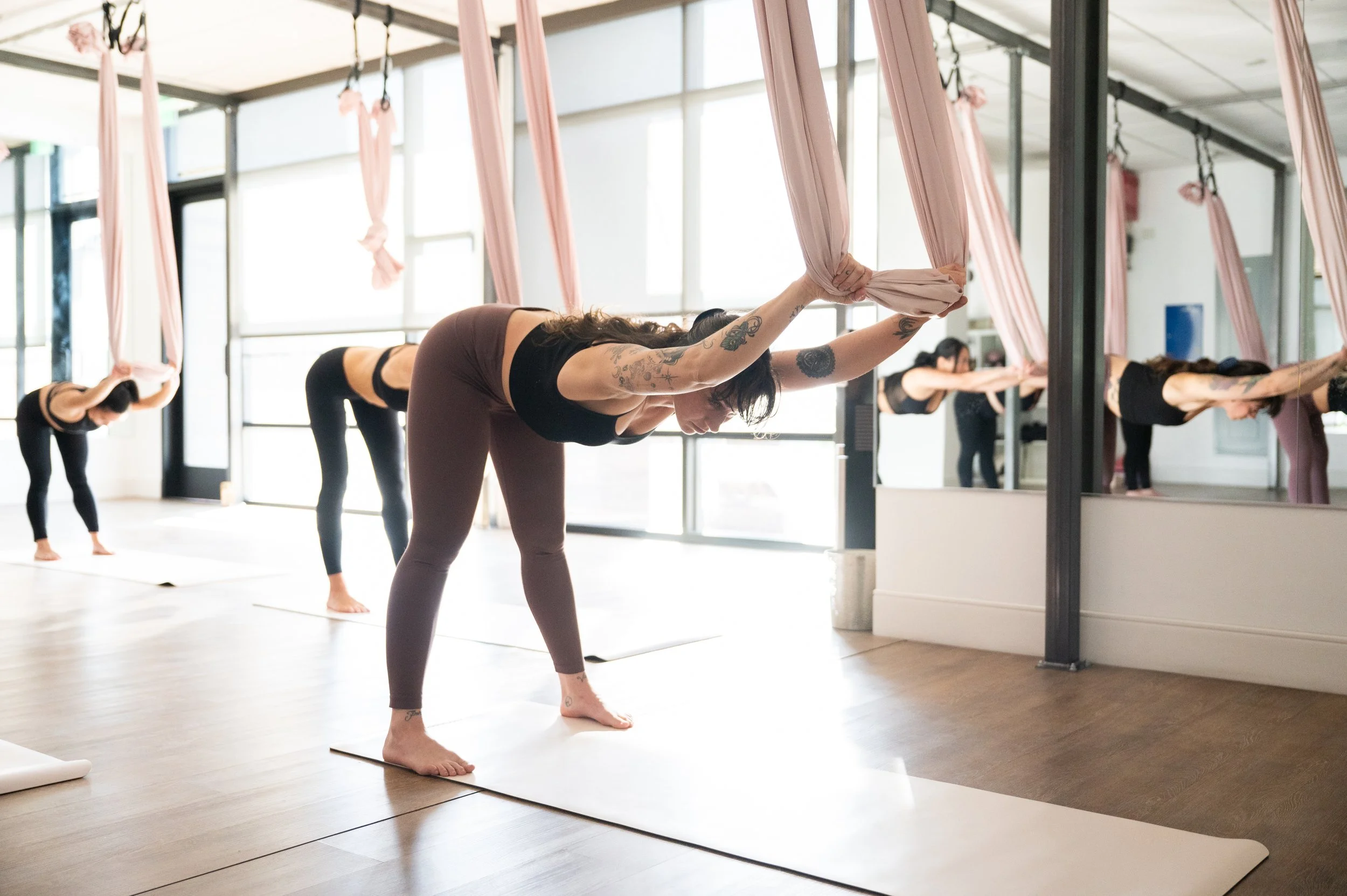
Short answer: Yes.
Long answer: There are many root causes of back pain, so lets rule out which ones Aerial Yoga helps with so you can decide for yourself.
How Aerial Yoga Helps Relieve Back Pain
Back pain is often caused by a combination of:
Sitting for long periods
Poor posture
Muscle tightness
Weak core support
Compression in the spine
Aerial yoga addresses all of these at once.
Spinal Decompression
One of the biggest benefits of aerial yoga is spinal decompression.
When you hang in the hammock, gravity gently pulls your spine into alignment, creating space between your vertebrae.
This can help:
Reduce pressure in the lower back
Relieve tension
Improve mobility
For people dealing with nerve-related pain (including sciatica), this decompression can feel especially relieving.
Gentle Back Traction Without Strain
Traditional stretching can sometimes make back pain worse.
Aerial yoga is different.
The hammock supports your body so you can stretch your spine without loading it, allowing for safer, more comfortable traction.
This is especially helpful for:
Tight lower backs
Stiff hips
People who feel worse doing floor exercises
Core Strength That Supports Your Spine
Many people think their back pain is caused by injury, but often it’s due to weak core muscles.
Your core supports your spine.
In aerial yoga, you naturally build strength in:
Your abs
Your lower back
Your pelvic stabilizers
This added support helps reduce pain in everyday movement.
Improved Flexibility in Key Areas
Tight muscles are one of the biggest contributors to back pain.
Aerial yoga safely opens:
Hamstrings
Hip flexors
Glutes
These areas are closely connected to the lower back and can contribute to both general back pain and sciatica symptoms when tight.
Nervous System Relief
Back pain isn’t just physical. It’s also neurological.
The hammock creates a calming, supported environment that helps your body relax.
Many students report:
Less tension
Reduced pain sensitivity
Better sleep
All of which play a role in long-term back pain relief.
Why Aerial Yoga Works When Other Methods Don’t
Many back pain solutions focus on just one piece of the problem.
Massage → temporary relief
Chiropractic → alignment
Physical therapy → strength
Aerial yoga combines all three:
Decompression
Movement
Strength
Stretching
All in one session.
And most importantly, it’s something people actually enjoy and stick with.
What Kind of Back Pain Does Aerial Yoga Help?
Aerial yoga is most effective for:
Back pain from sitting all day
Posture-related pain
Muscle tightness and stiffness
General low back discomfort
Mild nerve-related pain (like sciatica symptoms)
It works best for soft tissue and tension-based pain, not structural damage.
If your back pain is from a traumatic injury (like a car accident), aerial yoga may still feel good, but it’s not designed to treat the root cause.
What Results Can You Expect?
After your first class:
Immediate relief during decompression
A lighter, less compressed feeling in your back
After consistent classes:
Less frequent back pain
Improved posture
Increased mobility
Stronger core support
Important:
One class feels good.
Consistency is what creates lasting change.
Back Pain Relief in Huntington Beach, CA
At Open Aerial Yoga, we’ve helped thousands of beginners safely use aerial yoga to relieve back pain.
Many of our students come in feeling stiff, tight, and frustrated.
Within a few weeks of consistent classes, they notice:
Less pain
Better movement
More confidence in their body
Is Aerial Yoga Worth Trying for Back Pain?
If you’re looking for a natural, low-impact way to relieve back pain, aerial yoga is absolutely worth trying.
It’s not a quick fix.
But it is one of the few methods that:
Decompresses your spine
Strengthens your body
Improves mobility
And actually feels good to do
Ready to Try Aerial Yoga for Back Pain?
If you’re dealing with back pain and want something that supports your body instead of stressing it, this is a great place to start.
Book your first class at Open Aerial Yoga and see how your body responds.
Most people wish they had tried it sooner.